Company Vehicle Accident Claim Steps After a Crash
A company vehicle accident claim is not handled like an ordinary fender-bender when the other driver was working, driving a fleet vehicle, or hauling equipment for a business. The crash may have been caused by one person behind the wheel, but a company, its insurance carrier, and its lawyers may quickly move to protect the business. If you were seriously injured in East Texas, you need to protect your health, preserve the evidence, and understand who may be responsible before critical proof disappears.
A business vehicle can be a delivery van, service truck, oil field pickup, utility vehicle, passenger car assigned to an employee, or commercial truck. The company’s name on the door matters, but it is not the only factor. The central questions are why the driver was on the road, what the employer knew, and whether the company’s own decisions helped cause the collision.
When Can a Company Be Responsible for a Crash?
Under Texas law, an employer can often be held responsible for an employee’s negligence when the employee was acting within the course and scope of employment. Put plainly, if a worker was performing job duties or furthering the employer’s business when the crash happened, the company may share legal responsibility for the harm caused.
That can include a technician traveling to a service call, a sales representative driving between appointments, a construction worker transporting equipment, or a delivery driver making scheduled stops. It may also apply when a company allows an employee to use a vehicle for work-related purposes, even if the vehicle is not titled to the company.
The answer depends on the facts. A worker who left work for a purely personal errand may give the company a defense. The employer may also argue that the driver was an independent contractor rather than an employee. Those labels do not automatically end the inquiry. Control matters. Who set the schedule, assigned the route, supplied the truck, required company procedures, or supervised the work? Those details can reveal whether a company was truly operating through that driver.
Direct Negligence Can Expand the Case
Sometimes the company’s own conduct is as important as the driver’s mistake. A company may have hired an unsafe driver, ignored a history of crashes or traffic violations, failed to train workers, pushed unreasonable delivery schedules, or allowed an unsafe vehicle onto the road.
Maintenance failures can be devastating. Bad tires, worn brakes, broken lights, steering problems, unsecured cargo, and neglected inspections can turn a preventable issue into a life-changing crash. In commercial vehicle cases, records may show whether the business followed its own safety rules or treated them as paperwork.
A serious company vehicle accident claim should investigate both tracks: what the driver did in the seconds before impact and what the company did, or failed to do, long before the collision.
Evidence Can Disappear Fast After a Company Vehicle Accident Claim
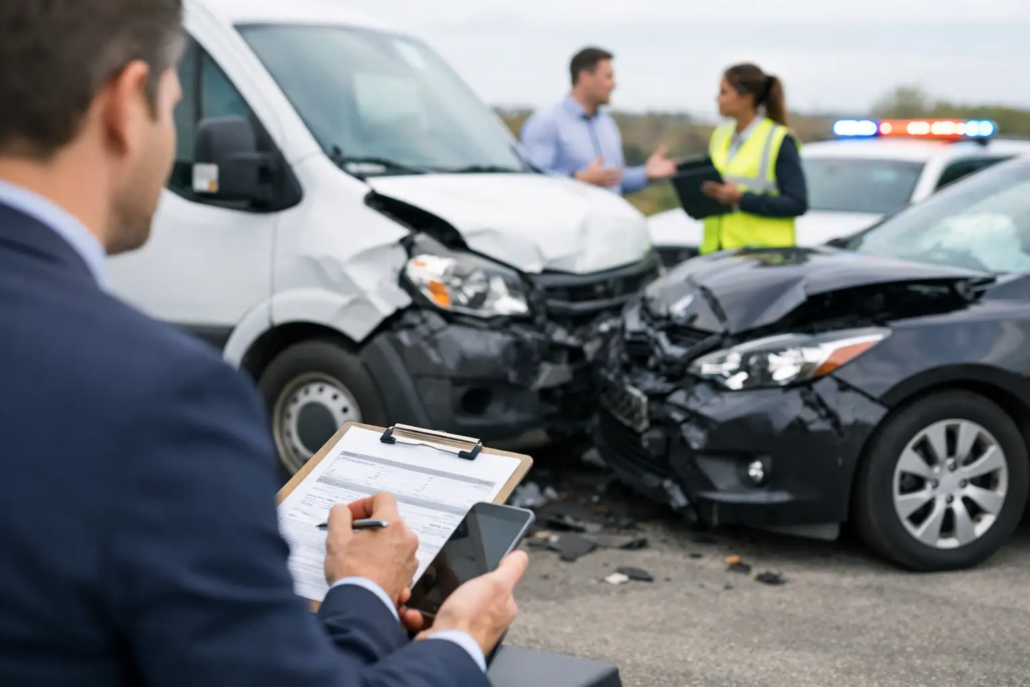
Businesses and insurers know what is at stake. After a severe wreck, they may dispatch investigators, photograph the scene, inspect the vehicle, and begin building defenses immediately. That does not mean they are looking out for the injured person.
Your first priority is medical care. Adrenaline can hide pain after a collision, and traumatic brain injuries, internal injuries, spinal damage, and soft-tissue injuries may not be obvious at the roadside. Follow through with recommended treatment and describe every symptom to your medical providers. Gaps in care can give an insurer ammunition to argue that your injuries were minor or unrelated.
If you are able, save what you can. Keep photographs of vehicle damage, the crash scene, visible injuries, debris, road conditions, and any company markings on the other vehicle. Preserve the names and contact information of witnesses. Do not repair, sell, or dispose of your damaged vehicle until it has been properly documented.
The most valuable proof may be held by the company. Depending on the vehicle and the work involved, that can include dash camera footage, GPS data, electronic logging information, cell phone records, dispatch messages, inspection reports, maintenance logs, training files, personnel records, delivery schedules, and internal safety policies. Video systems can overwrite footage in days. Electronic data can be altered or lost. A prompt legal demand to preserve evidence can make a major difference.
Do Not Let the Insurance Company Define the Claim
The company’s insurer may contact you quickly, sometimes while you are still in pain, missing work, or trying to understand the medical diagnosis. An adjuster may sound concerned and reasonable. Their role, however, is to limit the company’s financial exposure.
Be careful about giving a recorded statement, signing a broad medical authorization, or accepting an early settlement. A quick offer may cover an ambulance bill or a short period of missed work, while ignoring surgery, rehabilitation, future treatment, lost earning capacity, physical impairment, and the daily consequences of chronic pain.
A fair claim must account for the full damage caused by the collision. Depending on the case, recoverable damages may include medical expenses, future medical care, lost wages, reduced earning capacity, pain and mental anguish, physical impairment, disfigurement, and property damage. When a crash takes a life, surviving family members may have a wrongful death claim for the losses that follow.
Texas follows a modified comparative responsibility rule. If you are found more than 50 percent responsible, you may be barred from recovering damages. If you share some responsibility but are not more than 50 percent at fault, your recovery may be reduced by your percentage of fault. Insurers use this rule aggressively. They may claim you were speeding, distracted, failed to brake, or could have avoided the impact. Evidence, not assumptions, should decide those questions.
What to Do in the Days After the Collision
There is no substitute for immediate medical attention and prompt legal advice after a serious crash. The following actions can protect a claim while you focus on recovery:
- Obtain a copy of the crash report and check it for obvious errors, but do not assume the officer’s initial findings answer every question of fault.
- Keep all medical records, prescriptions, receipts, work restrictions, and documentation of missed income in one place.
- Write down how the injuries affect sleep, mobility, family responsibilities, work, and daily activities. Those details are easy to forget months later.
- Avoid posting about the wreck, your injuries, or physical activities on social media. Insurance companies may use posts out of context.
- Speak with an experienced Texas injury lawyer before providing statements or signing settlement documents.
Texas generally gives injured people two years from the date of an accident to file a personal injury lawsuit, and wrongful death claims are also commonly subject to a two-year deadline. But waiting until the deadline approaches is risky. Deadlines can differ in certain situations, and a case can become harder to prove as witnesses move, memories fade, and records disappear.
Why These Cases Require a Serious Investigation
A company vehicle crash can involve more insurance coverage than a typical personal auto claim, but larger policies do not make recovery easy. Commercial insurers frequently have experienced adjusters, defense lawyers, and investigators working to minimize payment. They may dispute employment status, argue the driver was off duty, blame a third party, or claim a preexisting condition caused your symptoms.
A strong case requires a disciplined investigation. That may include reviewing vehicle data, obtaining employment and maintenance records, examining the scene, consulting accident reconstruction experts, and calculating the real cost of future care and lost income. In a catastrophic injury or wrongful death case, the difference between a rushed settlement and a fully developed claim can affect a family’s financial security for years.
At Cooper Law Firm, injured Texans and grieving families can seek a free consultation to discuss what happened, what evidence needs to be preserved, and who should be held accountable. You should not have to face a corporate insurer alone while you are trying to heal. Get answers early, protect the proof, and make the company answer for the harm its vehicle or driver caused.