

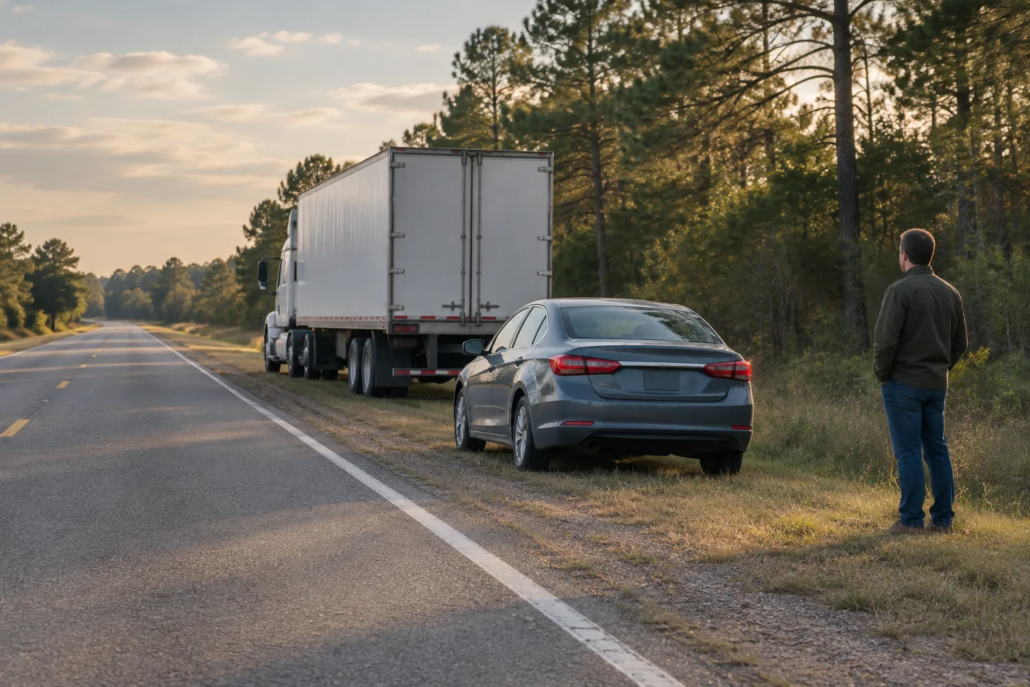
How Can a Texas Truck-Crash Claimant Track UM/UIM Notice?
A truck crash can leave an injured person facing a confusing insurance question: what happens if the driver has no coverage, cannot be identified, or has liability limits that may not cover the losses? For Van Zant drivers, underinsured motorist coverage after a truck accident in Texas may be one possible source to examine, but it is not automatic. The policy’s wording, the facts of the crash, and the insurance available from responsible parties all matter.
Cooper Law Firm helps readers understand the issues to review without assuming that a particular policy will apply. This guide explains how to check whether truck coverage is truly insufficient, locate your own UM/UIM policy, and keep claim documents organized while insurers evaluate coverage and liability. It also explains why notice and cooperation requirements deserve attention early in the process.
How underinsured motorist coverage may fit a Texas truck accident
Uninsured motorist (UM) coverage and underinsured motorist (UIM) coverage are provisions that may exist in a person’s own auto policy. Generally, UM coverage may be relevant when an at-fault driver has no applicable liability insurance, while UIM coverage may be relevant when the available liability coverage is not enough to address covered losses. A hit-and-run crash may raise a UM question, but policy terms and applicable requirements matter.
In Texas, insurers generally must offer UM/UIM coverage, but a policyholder may reject it in writing. That means a driver should verify what coverage was selected rather than assume it is included. The declarations page is a useful starting point, but the full policy can contain conditions, definitions, exclusions, and procedures that affect whether a claim can proceed.
Check whether the truck’s insurance is truly insufficient
Before treating a truck driver’s policy as inadequate, it can be important to identify the potentially available insurance connected to the driver, trucking company, and other responsible parties. A listed liability limit alone may not tell the whole story; additional or excess coverage could be relevant depending on the facts and policy terms. A review of other insurance layers that may apply to a Van Zant truck crash can help explain why available coverage should be checked before drawing conclusions about UIM.
UIM coverage is not simply an extra layer that automatically pays whenever a truck crash causes serious losses. The policy, the amount of applicable liability coverage, responsibility for the crash, and the value of covered damages can all affect the analysis. Texas rules and policy terms may change, and this overview concerns Texas only; laws and procedures vary by jurisdiction.
Find your policy and check its requirements
A practical first step is to locate the auto policy that may cover you. Check the declarations page for UM/UIM coverage and limits, then review the full policy for who qualifies as an insured, which vehicles are covered, and what conditions apply. If you cannot find the documents, an insurer or insurance agent may be able to provide copies. A household policy or another applicable policy may also need consideration, depending on the circumstances.
Do not rely on the declarations page alone. Look for provisions addressing notice, cooperation with the insurer, documentation, settlement with another insurer, and how payments from other sources may affect a UM/UIM claim. The exact wording matters. These are Texas options for an uninsured-driver injury claim to evaluate in context—not a guarantee that coverage exists or that a claim will be accepted.
If the truck or driver cannot be identified
A hit-and-run may involve extra policy requirements or questions about whether the unknown vehicle’s involvement can be established. Promptly reporting the collision and preserving available evidence may be important, but the specific policy language controls. Witness names, nearby camera footage, vehicle descriptions, photographs, and a crash report may help document what happened. See coverage options after an unidentified Van Zant truck crash for related guidance on evidence and reporting considerations.
For a Van Zant crash, keep a record of which law enforcement agency responded and how to request the crash report, if one was made. Do not assume that a report alone resolves who was at fault or whether an unknown vehicle meets the policy’s requirements. Insurers assess evidence under the applicable policy and law.
Organize records and track claim communications
Coverage questions can involve more than one insurer. A clear file can help you and any representative follow what has been reported, what information was requested, and which coverage sources remain under review. Consider keeping copies of:
- Your declarations page and complete auto policy, plus any policy information received from the trucking company or its insurer.
- The crash report, photographs, witness details, and any available video or vehicle information.
- Claim numbers, insurer names, adjuster contact details, letters, emails, and notes of phone calls.
- Medical bills and records you receive, wage-loss documentation, and a dated list of expenses or other claimed losses.
- Notices sent to insurers, requests for information, and records showing when you responded or supplied documents.
A dated communication log can make it easier to track notice and cooperation requests. Keep copies of what you send and note how and when it was delivered. If another insurer discusses a settlement, the effect on a potential UM/UIM claim may depend on the policy and circumstances; it can be useful to understand that interaction before decisions are made.
Avoid assuming that a claim is covered, that the truck’s stated limits are the only available insurance, or that one insurer’s position resolves every other policy. An organized file supports a more complete review. These steps in a Texas truck accident insurance claim offer additional context on managing communications while a claim is evaluated. This practical approach can help Van Zant drivers keep the coverage question distinct from the separate questions of fault and damages.
Frequently Asked Questions
Can I use UIM if the trucking company’s insurer has not paid its policy limits?
Possibly, but the answer depends on your policy and the facts. UIM coverage generally concerns whether available liability coverage is insufficient in relation to covered losses; a policy may also set conditions for establishing a claim or coordinating payment. Do not assume that an insurer’s offer, denial, or delay by itself determines whether UIM applies. Review the policy language and the available insurance together.
Does UM coverage apply if the truck driver cannot be identified?
It may, but an unknown driver or hit-and-run can raise specific proof, reporting, and policy-condition questions. The requirements depend on the policy and applicable law. Preserving witness information, video, photographs, and details about the truck can help document the event. Whether the evidence meets the policy’s requirements is a fact-specific issue, so avoid treating an unidentified driver as automatic proof of UM coverage.
Which documents should I gather for a Van Zant truck insurance claim?
Start with your declarations page and full policy, then collect the crash report, photographs, witness details, claim correspondence, and any available information about the truck’s insurer and coverage. Keep medical and wage records as they become available, along with notes of calls and dated copies of notices or requested documents. An organized file helps clarify what has been reported and what information may still be missing.
Can I make a UM/UIM claim through more than one policy?
More than one policy may need review, depending on who was involved, household relationships, vehicle ownership, and policy terms. But the existence of multiple policies does not mean each one applies or that benefits can be collected without limits. Insurers may coordinate coverage under policy provisions and applicable law. A careful review can identify potentially relevant policies and any notice or cooperation requirements tied to them.
How Cooper Law Firm Can Help
Cooper Law Firm is dedicated to helping injured people understand the insurance questions that can follow a truck crash. A review may include your policy language, available truck or carrier coverage, crash records, and insurer communications so the coverage issues can be considered in context. No policy or claim is the same, and the outcome depends on the facts, applicable law, and contract terms.
If you were hurt in a Van Zant truck crash and are unsure whether UM/UIM coverage may apply, contact Cooper Law Firm to request a free consultation or case evaluation. The firm is ready to evaluate your situation and discuss possible next steps without promising a particular result.
The information in this article is for educational purposes only and does not constitute legal advice. Contact a qualified attorney authorized to practice in the jurisdiction that applies to your matter for advice specific to your situation.






Leave a Reply
Want to join the discussion?Feel free to contribute!