Van Zandt County Industrial Accident Lawyers
Serious Representation for Workers and Families After Industrial Accidents in Canton, Van, Wills Point, Grand Saline, Edgewood, and Across Van Zandt County
An industrial accident can turn an ordinary workday into a medical, financial, and legal crisis. A worker may leave home expecting to finish a shift and return with a spinal injury, traumatic brain injury, severe burns, crushed limbs, chemical exposure, or the devastating news that a family member was killed. While the injured person is in a hospital or trying to arrange follow-up care, the employer, site operator, contractors, equipment companies, and insurers may already be investigating how to protect themselves.
If you were injured at a manufacturing plant, warehouse, distribution center, construction site, oilfield operation, agricultural facility, utility project, trucking terminal, fabrication shop, or another industrial workplace in Van Zandt County, you need to know that Texas does not treat every on-the-job injury the same way. The same is true whether the accident happened in Canton, Van, Wills Point, Grand Saline, Edgewood, Ben Wheeler, Edom, Eustace, Fruitvale, Myrtle Springs, or a rural area of the county. Your rights may depend on several immediate questions:
- Did your employer carry Texas workers’ compensation insurance on the date of the accident?
- Was your employer a nonsubscriber that chose not to participate in the Texas workers’ compensation system?
- Did a contractor, property owner, equipment manufacturer, maintenance provider, truck driver, utility, or another third party contribute to the accident?
- Were you classified as an employee, temporary worker, borrowed employee, or independent contractor?
- Did the accident cause a permanent disability or death?
- Is critical physical or electronic evidence in danger of being repaired, erased, moved, or destroyed?
Those questions determine whether the case may involve workers’ compensation benefits, a negligence lawsuit against a nonsubscribing employer, a third-party personal injury claim, a product-liability case, a wrongful death action, or several coordinated claims at the same time.
Cooper Law Firm represents injured people and families in Van Zandt County, throughout East Texas, and across Texas. Attorney Eric Cooper began his career representing corporations and insurers before leaving defense practice in 2007 to represent injured individuals and families. That background can be valuable in a serious industrial case because the defendants and insurance carriers begin evaluating exposure immediately.
The firm offers free initial consultations. Call 1-855-297-HURT (4878), the firm’s listed Canton number at (903) 567-4878, or (903) 297-0037 to discuss what happened and learn which legal options may apply.
Important: Get emergency medical help first. This page provides general information, not legal or medical advice. Deadlines and legal rights depend on the specific facts, parties, insurance coverage, and date of injury.

Why Industrial Accident Cases Require More Than a Routine Injury Investigation
An industrial accident is rarely explained by one moment or one person. What appears to be “operator error” may actually trace back to a missing machine guard, defective interlock, ignored maintenance warning, unrealistic production quota, inadequate lockout/tagout procedure, poor contractor coordination, or a supervisor’s order to keep operating unsafe equipment.
Multiple companies often share an industrial site. One company may own the property, another may operate the facility, a general contractor may control the project, several subcontractors may perform specialized work, a staffing agency may supply labor, and outside companies may inspect, maintain, lease, or manufacture the equipment. Each company may possess different evidence and owe different legal duties.
A meaningful investigation therefore asks more than, “Who was standing closest to the machine?” It asks:
- Who owned, operated, controlled, inspected, repaired, and maintained the equipment?
- Who created the work procedure and trained the crew?
- Who controlled the pace, sequence, and method of the work?
- Were safety devices bypassed, defeated, missing, or poorly designed?
- Did earlier incidents, near misses, complaints, alarms, or inspection reports warn of the danger?
- Was the worker given the correct personal protective equipment and enough time to use it?
- Did production pressure or understaffing encourage shortcuts?
- Did a contractor introduce an ignition source, chemical hazard, electrical hazard, unstable load, or unsafe condition?
- Was the injured person an employee of the company responsible for the hazard, or did a separate company cause the injury?
- Does Texas workers’ compensation immunity protect any defendant, and which potential defendants remain legally responsible?
The answers may be found in evidence the injured worker never sees unless it is demanded and preserved: surveillance footage, machine data, maintenance histories, safety audits, work orders, text messages, training records, job-hazard analyses, incident reports, contractor agreements, inspection files, prior complaints, and electronic communications.
Industrial Accident Cases Cooper Law Firm Handles
Industrial work presents many different hazards. Cooper Law Firm evaluates serious injury and fatality cases involving circumstances such as:
Machinery, Caught-In, and Crushing Accidents
Workers can be pulled into conveyors, rollers, presses, augers, compactors, mixers, saws, lathes, and automated production equipment. A caught-in accident may involve a missing guard, an ineffective emergency stop, unexpected startup, stored energy, a defective sensor, or inadequate lockout/tagout practices. These incidents can cause amputations, degloving injuries, crush syndrome, organ damage, fractures, and death.
Forklift, Loader, Crane, and Heavy-Equipment Accidents
Industrial vehicles can strike workers, drop loads, tip over, pin employees against fixed objects, or collide with other equipment. Crane and rigging failures may involve overloaded equipment, defective slings, poor signaling, inadequate inspections, unstable ground, or an operator who lacked proper training. The operator’s employer, site controller, equipment owner, rental company, maintenance contractor, or parts manufacturer may each require investigation.
Falls From Heights and Scaffold Collapses
Falls from roofs, platforms, ladders, scaffolds, mezzanines, lifts, catwalks, and open-sided floors frequently result in brain injuries, spinal damage, fractures, and death. Liability may turn on fall-protection systems, anchor points, guardrails, scaffold assembly, lift maintenance, training, inspection, and which company controlled the elevated work.
Fires, Explosions, and Severe Burns
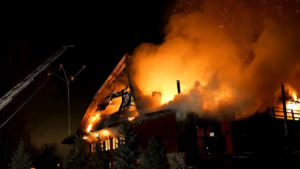
Industrial fires and explosions may result from gas leaks, combustible dust, flammable vapors, hot work, electrical faults, chemical reactions, pressurized vessels, improper storage, poor ventilation, and failed detection or suppression systems. Victims may suffer thermal burns, chemical burns, electrical injuries, blast trauma, smoke inhalation, permanent scarring, and psychological trauma. Learn more about the firm’s work in fire, explosion, and severe burn litigation.
Electrical Accidents and Arc-Flash Injuries
Electrocutions and arc flashes can happen when circuits are not de-energized, lockout procedures fail, grounding is inadequate, equipment is defective, or workers are not warned about energized components. Even a surviving worker may face deep tissue damage, nerve injury, cardiac complications, loss of function, amputation, and severe burns.
Chemical Releases and Toxic Exposure
Industrial chemicals can cause immediate burns, poisoning, respiratory injury, neurological damage, or diseases that appear months or years later. These cases may involve missing hazard communication, inaccurate safety data, incompatible chemical storage, inadequate respiratory protection, poor ventilation, spills, leaks, or failure to monitor exposure. The date a worker knew or reasonably should have known that a disease was work-related can become important to filing deadlines.
Oilfield and Energy-Sector Accidents
East Texas workers may encounter well blowouts, fires, explosions, tank incidents, high-pressure lines, falling pipe, defective tools, heavy-equipment collisions, toxic gas, and long shifts. Different contractors frequently work side by side, making it especially important to identify which company controlled the dangerous operation. Cooper Law Firm has specific experience with Texas oilfield injury cases.
Construction and Trench Accidents
Industrial construction injuries may involve trench collapses, falling materials, cranes, scaffolds, lifts, electrical systems, welding, demolition, structural failures, and moving vehicles. Texas law can impose special requirements in claims against commercial property owners when an injury arises from constructing, repairing, renovating, or modifying an improvement to real property. These cases require close analysis of contracts, actual control, and knowledge of the danger.
Pressure-System, Boiler, Tank, and Pipeline Failures
Stored pressure can turn a valve, flange, pipe, vessel, tire, or tank into a deadly projectile or release superheated liquid, steam, gas, or chemicals. Investigators may need to analyze metallurgy, corrosion, pressure-relief systems, inspection records, design specifications, operating limits, and prior leak or repair histories.
Industrial Truck and Transportation Accidents
A work injury may also be a commercial-vehicle case. Yard trucks, delivery vehicles, 18-wheelers, dump trucks, and construction vehicles can injure employees on a worksite or along Van Zandt County transportation routes such as Interstate 20, U.S. Highway 80, State Highway 19, State Highway 64, and surrounding farm-to-market roads. Driver logs, vehicle data, dispatch communications, maintenance records, cargo securement, and company safety practices may be central to the claim.
Falling-Object and Material-Handling Accidents
Improperly stacked inventory, unsecured tools, failed shelving, defective pallets, crane loads, and falling construction materials can cause catastrophic head, neck, and spinal injuries. A complete investigation considers the storage system, load limits, inspections, rigging, work-zone controls, and whether earlier warnings were ignored.
Confined-Space and Suffocation Incidents
Tanks, pits, vessels, sewers, silos, and other confined spaces can contain toxic atmospheres or insufficient oxygen. Fatalities may occur not only to the first worker but also to coworkers who attempt a rescue without proper breathing equipment, atmospheric testing, retrieval systems, attendants, or an established rescue plan.
Common Injuries Caused by Industrial Accidents
Industrial incidents often involve greater force, heat, pressure, height, or toxic exposure than ordinary accidents. Injuries may include:
- Traumatic brain injuries, concussions, and cognitive impairment
- Spinal cord damage, paralysis, herniated discs, and chronic back or neck pain
- Amputations and loss of use of a hand, arm, foot, or leg
- Crush injuries, compartment syndrome, and internal organ damage
- Third-degree burns, electrical burns, chemical burns, and inhalation injuries
- Multiple fractures and orthopedic injuries requiring hardware or joint replacement
- Eye injuries, vision loss, and hearing loss
- Nerve damage, complex regional pain syndrome, and chronic pain
- Toxic encephalopathy, respiratory disease, cancer, and other occupational illnesses
- Scarring, disfigurement, and reduced mobility
- Post-traumatic stress, depression, anxiety, and sleep disorders
- Fatal injuries resulting in wrongful death and survival claims
The financial effect extends beyond the first hospital bill. A seriously injured worker may need multiple surgeries, rehabilitation, prosthetics, home modifications, assistive technology, attendant care, counseling, medication, vocational retraining, and future replacement of medical devices. A fair case evaluation must measure lifetime consequences, not merely the invoices received during the first few weeks.
The Three Main Legal Paths After a Van Zandt County Industrial Accident
- A Texas Workers’ Compensation Claim
Texas allows most private employers to decide whether to carry workers’ compensation insurance. An employer that carries approved coverage is commonly called a subscriber. Governmental employers—including cities, counties, public schools, and public utilities—must generally have workers’ compensation coverage.
When an employee is covered by a subscribing employer’s policy, workers’ compensation generally pays benefits without requiring the employee to prove that the employer was negligent. In exchange, workers’ compensation is usually the employee’s exclusive remedy against that employer for an accidental work injury. That means the employee ordinarily cannot sue the subscribing employer for pain and suffering based on ordinary negligence.
Workers’ compensation does not necessarily end the investigation. A covered worker may still have a lawsuit against a negligent third party. Texas Labor Code §417.001 permits an injured employee or legal beneficiary to seek damages from a liable third party while also pursuing workers’ compensation benefits.
- A Negligence Claim Against a Texas Nonsubscriber Employer
A nonsubscriber is a private Texas employer that does not carry approved Texas workers’ compensation coverage. A nonsubscriber may offer an occupational injury plan or other benefits, but that plan is not automatically the same as Texas workers’ compensation.
If employer negligence caused the injury, an employee may be able to sue a nonsubscribing employer directly. Negligence may include failing to provide reasonably safe equipment, adequate training, sufficient help, proper supervision, necessary protective equipment, a safe work procedure, or a reasonably safe workplace.
Texas law restricts several defenses a nonsubscriber would otherwise try to use. Under Texas Labor Code §406.033, a nonsubscriber generally cannot avoid liability by arguing that the employee was contributorily negligent, assumed the risk, or was injured solely through a coworker’s negligence. The worker still must prove that employer negligence caused the injury, and the precise effect of other companies’ conduct can be complex.
Some nonsubscribers require employees to participate in an internal benefit process or arbitration. Documents may contain short notice provisions, medical requirements, benefit limits, or dispute procedures. Do not assume that an employer-sponsored plan provides every right available under Texas law, and do not sign a release before it has been reviewed.
- A Third-Party Personal Injury or Product-Liability Claim
A third party is generally a person or business other than the injured worker’s protected subscribing employer. Industrial sites often involve several possible third parties, including:
- A general contractor or subcontractor
- The owner or operator of the premises
- A machinery, tool, component, or safety-equipment manufacturer
- An equipment rental, inspection, or maintenance company
- A trucking company, commercial driver, or material supplier
- An electrical, welding, scaffolding, or rigging contractor
- An engineering or safety-consulting company
- A chemical manufacturer or distributor
- A utility company
- A staffing company or host employer, depending on the employment and coverage relationships
A third-party case can pursue losses that workers’ compensation does not pay, including physical pain, mental anguish, disfigurement, and physical impairment. It can also seek complete past and future economic losses, subject to proof and Texas law.
The workers’ compensation carrier may have a statutory reimbursement or subrogation interest in a third-party recovery. That does not erase the third-party claim, but it makes coordination important. A settlement that ignores the carrier’s rights or the effect on future benefits can create serious problems.
What Benefits Does Texas Workers’ Compensation Provide?
The Texas Division of Workers’ Compensation identifies four broad categories of benefits: income, medical, burial, and death benefits.
Medical Benefits
Workers’ compensation can pay reasonable and necessary medical care for a compensable work injury or occupational illness. Disputes may arise over whether treatment is related to the accident, medically necessary, within a network, properly authorized, or subject to utilization review.
Temporary Income Benefits
Temporary income benefits may be available when a compensable injury causes a worker to lose some or all wages for more than seven days. The basic calculation is generally 70% of the difference between the worker’s average weekly wage and post-injury earnings, subject to statutory minimums and maximums. Benefits ordinarily begin after the eighth day of disability; the first week is generally paid only when disability lasts at least 14 days. Temporary benefits can end at maximum medical improvement, when pre-injury earning ability returns, or at the statutory limit.
Impairment Income Benefits
After maximum medical improvement, a doctor may assign an impairment rating reflecting permanent damage to the body as a whole. Eligible workers generally receive three weeks of impairment income benefits for each percentage point of impairment. A 10% impairment rating, for example, ordinarily corresponds to 30 weeks of impairment benefits. Disputes over maximum medical improvement or the impairment rating are time-sensitive.
Supplemental Income Benefits
Some workers with an impairment rating of 15% or more who meet detailed earnings and job-search requirements may qualify for supplemental income benefits after impairment benefits end. Eligibility is not automatic and is evaluated in qualifying periods.
Lifetime Income Benefits
Lifetime income benefits are limited to catastrophic injuries identified by statute, such as specified losses of limbs or sight, certain permanent paralysis, qualifying traumatic brain injuries, and certain extensive third-degree burns. The Texas Division of Workers’ Compensation states that lifetime benefits are generally 75% of average weekly wage, subject to an initial maximum, with a 3% annual increase.
Death and Burial Benefits
Eligible beneficiaries may receive death benefits when a compensable work injury or illness causes death. Texas currently calculates death benefits at 75% of the deceased employee’s average weekly wage, subject to minimum and maximum rates and rules determining who qualifies and for how long. Burial benefits for injuries occurring on or after September 1, 2015, can reimburse up to $10,000 in qualifying expenses. A beneficiary generally must file DWC Form-042 within one year of death.
Workers’ compensation benefits can be crucial, but they ordinarily do not compensate an injured worker for pain, mental anguish, disfigurement, or the full human cost of a catastrophic injury. That is why a third-party or nonsubscriber investigation matters even when benefits have started.
Compensation Available in a Nonsubscriber or Third-Party Lawsuit
The damages available depend on the legal claim and evidence. A personal injury case may include:
Past and Future Medical Expenses
This may include emergency care, hospitalization, surgery, rehabilitation, therapy, medication, specialist care, prosthetics, medical equipment, counseling, home health services, attendant care, and future treatment shown to be reasonably necessary. Catastrophic cases may require a life-care planner to estimate medical and support needs over the person’s expected lifetime.
Past Lost Wages and Future Loss of Earning Capacity
Past wage loss measures income already missed. Loss of earning capacity addresses the ability to earn money in the future. A worker may return to some employment and still have a substantial loss if permanent restrictions prevent a return to a skilled trade, overtime, advancement, or work of comparable pay. Economists and vocational experts may analyze wages, benefits, education, restrictions, and expected work life.
Physical Pain and Mental Anguish
Serious industrial injuries can cause extreme pain, fear, grief, anxiety, depression, post-traumatic stress, and loss of independence. Medical records, testimony, counseling records, and evidence of day-to-day effects may help explain these losses.
Physical Impairment
Physical impairment concerns the loss of the ability to participate in activities independently of lost wages and ordinary pain. Examples may include the inability to walk normally, lift a child, drive, exercise, perform household tasks, or pursue former hobbies.
Disfigurement
Amputations, burn scars, skin grafts, surgical scars, contractures, and other visible changes may support a separate disfigurement claim. Photographs taken throughout recovery can document changes that a final medical examination may not fully show.
Household and Family-Related Losses
Depending on the facts, recoverable losses may include the value of replacement household services and a spouse’s loss of consortium. These claims require evidence and are not automatic.
Exemplary Damages
Exemplary damages may be available in a lawsuit when legally sufficient evidence proves fraud, malice, or gross negligence by clear and convincing evidence. Gross negligence requires much more than an ordinary mistake. It generally involves an extreme degree of risk and actual, subjective awareness of the risk followed by conscious indifference. Texas law imposes procedural requirements and often caps exemplary damages.
Fatal Industrial Accidents and the Rights of Families
When an industrial accident causes death, several distinct claims may exist.
Wrongful Death Claim
Under Texas law, a wrongful death claim is for the exclusive benefit of the deceased person’s surviving spouse, children, and parents. Depending on the proof, damages may include lost care, maintenance, support, services, advice, counsel, expected inheritance, companionship, society, and mental anguish.
Survival Claim
A survival claim belongs to the estate and preserves the personal injury claim the worker could have brought had the worker survived. It may include medical expenses, conscious pain and mental anguish before death, lost earnings before death, and other recoverable losses. The facts may require an estate representative to act.
Workers’ Compensation Death Benefits
If the employee was covered, qualifying beneficiaries may pursue workers’ compensation death benefits. These benefits are separate from a potential third-party wrongful death case.
Gross-Negligence Claim Against a Subscribing Employer
Workers’ compensation usually protects a subscribing employer from an ordinary negligence lawsuit. However, Texas Labor Code §408.001 preserves a claim for exemplary damages by the surviving spouse or heirs of the body when a covered employee’s death was caused by the employer’s intentional act or omission or gross negligence. This is a demanding, evidence-intensive claim. Prior safety warnings, similar incidents, disabled protective systems, ignored inspection findings, and management decisions can become crucial.
Families should obtain advice quickly. Accident scenes change, witnesses disperse, equipment is repaired, and the two-year limitations period applicable to many wrongful death lawsuits is not the only deadline that may apply.
Evidence That Can Prove an Industrial Accident Case
A strong case is built from evidence, not assumptions. Depending on the event, an investigation may seek:
- Scene photographs, video, measurements, and diagrams
- Surveillance footage and access-control data
- Damaged machinery, components, tools, clothing, and protective equipment
- Equipment serial numbers, model information, manuals, warnings, and design drawings
- Programmable logic controller data, event logs, telematics, and electronic control-module downloads
- Inspection, maintenance, repair, calibration, and lockout/tagout records
- Job-safety analyses, job-hazard analyses, permits, toolbox talks, and pre-shift meetings
- Training materials, certifications, personnel assignments, and supervision records
- OSHA logs, citations, reports, and prior complaints
- Internal incident reports, root-cause analyses, photographs, and witness interviews
- Emails, texts, radio traffic, production records, and work orders
- Contractor agreements, scopes of work, indemnity provisions, and site-control documents
- Prior incidents, near misses, malfunction reports, warranty claims, and recalls
- Time records showing long shifts, understaffing, or fatigue
- Medical records, imaging, photographs, work restrictions, and treatment recommendations
- Wage records, overtime history, tax records, benefits, and vocational evidence
Attorneys can send preservation notices demanding that relevant parties retain physical and electronic evidence. In appropriate cases, lawyers may seek a prompt site inspection and work with mechanical engineers, electrical engineers, fire investigators, industrial hygienists, metallurgists, human-factors experts, safety professionals, medical specialists, life-care planners, vocational experts, and economists.
An OSHA investigation can provide useful information, but it does not replace an independent civil investigation. OSHA’s objectives and proof standards differ from those in a personal injury lawsuit, and a citation does not automatically establish civil liability. A company may also possess relevant evidence that never appears in a public OSHA file.
What to Do After an Industrial Accident in Van Zandt County
- Get Emergency Medical Care
Call 911 when necessary and accept appropriate emergency treatment. Industrial injuries can involve internal bleeding, brain injury, inhalation injury, electrical damage, toxic exposure, or crush complications that are not immediately obvious. Tell medical providers how the accident happened and identify every symptom and affected body part.
- Report the Injury in Writing
Tell a supervisor, manager, or designated employer representative as soon as possible and create a written record. Include the date, time, location, basic mechanism, and injuries without guessing about facts you do not know. Keep a copy. For Texas workers’ compensation claims, notice to the employer is generally required within 30 days, subject to limited exceptions.
- Determine Whether the Employer Had Workers’ Compensation Coverage
Do not rely only on a supervisor’s description of the plan. Texas provides separate tools for checking subscriber, self-insured, governmental, and nonsubscriber status. Coverage must be checked for the employer and the exact date of injury. The Texas Division of Workers’ Compensation explains how to verify coverage.
- File the Required Workers’ Compensation Claim
Reporting the injury to an employer is not always the same as filing a claim with the state. An injured employee generally must file DWC Form-041 within one year of the injury or within one year after the employee knew or should have known an occupational disease might be work-related, subject to limited exceptions. Do not wait for the employer or carrier to handle this automatically.
- Preserve What You Lawfully Can
Keep photographs, videos, witness names, schedules, pay records, safety messages, medical paperwork, benefit documents, and written communications. Preserve damaged clothing or personal protective equipment in your lawful possession without cleaning or altering it. Do not enter a restricted site, remove company property, or risk another injury to collect evidence.
- Avoid Speculation, Recorded Statements, and Broad Releases
Be truthful, but do not guess about machinery, sequence, fault, distance, speed, or technical causes. A company or insurance representative may request a recorded statement while you are medicated, in pain, or unaware of all contributing failures. Obtain advice before signing a release, medical authorization, benefit election, arbitration document, resignation, or settlement.
- Follow Medical Restrictions
Attend appointments, follow reasonable treatment advice, and give the employer accurate written restrictions. Do not allow pressure to return to dangerous work before a doctor releases you. Keep a symptom and recovery journal describing pain, sleep, mobility, daily limitations, medication effects, and activities you can no longer perform.
- Stay Off Social Media
Insurers and defense lawyers may collect public posts, photos, comments, and videos. Even an innocent family photograph may be taken out of context. Avoid discussing the accident, injuries, employer, defendants, travel, exercise, or settlement online while the claim is pending.
- Speak With an Industrial Accident Lawyer Promptly
Early legal involvement is about preserving choices and evidence, not rushing into a lawsuit or settlement. The sooner the parties, insurance coverage, and physical evidence are identified, the better the opportunity to understand every available claim.
Deadlines in a Texas Industrial Accident Case
Different claims arising from the same accident can have different deadlines:
- Notice to employer: A covered employee generally should notify the employer of a work injury within 30 days.
- Workers’ compensation injury claim: DWC Form-041 generally must be filed within one year of the injury or the date the worker knew or should have known an occupational disease was work-related, subject to limited exceptions.
- Workers’ compensation death claim: An eligible beneficiary generally must file DWC Form-042 within one year of the employee’s death.
- Personal injury lawsuit: Texas generally applies a two-year limitations period to personal injury claims.
- Wrongful death lawsuit: Texas generally requires suit within two years after death, though tolling and other rules can affect the calculation.
- Governmental claim: The Texas Tort Claims Act generally requires notice within six months, and a city charter or ordinance may impose a shorter lawful notice period.
- OSHA retaliation complaint: A federal Occupational Safety and Health Act retaliation complaint may have a deadline as short as 30 days after the retaliatory act.
- Contractual or benefit-plan requirements: Nonsubscriber plans and arbitration agreements may contain additional notice, appeal, or filing provisions.
Do not use a general deadline as a reason to wait. A claim can lose value long before a filing period expires because video is overwritten, machinery is repaired, the site changes, or a responsible business dissolves or loses insurance records.
Why Injured Workers Choose Cooper Law Firm
Attorney N. Eric Cooper graduated from Baylor Law School in 2002 and began his career with a regional defense firm. He later chose to represent injured people and families, bringing an understanding of how companies and insurers investigate, value, and defend significant injury claims. Cooper Law Firm’s current service-area directory includes both Van Zandt and Canton, and the firm represents clients throughout East Texas.
Cooper Law Firm’s published representative results include a $4.75 million gross recovery in a fatal industrial accident, a $1.3 million gross recovery involving an industrial scaffold collapse, a $255,000 gross recovery for an on-the-job back injury, and a $200,000 gross recovery for a nonsubscriber on-the-job low-back injury. The firm also reports a recovery involving defectively designed oilfield equipment. View the firm’s representative verdicts and settlements.
Past results do not guarantee or predict a similar result. The amounts stated by the firm are gross recoveries and do not reflect attorney fees, case expenses, medical liens, or subrogation interests. Every case depends on its own facts, injuries, evidence, insurance, law, and defendants.
Frequently Asked Questions About Van Zandt County Industrial Accident Claims
Do I have an industrial accident case if I was injured at work?
Possibly. Being injured at work does not automatically establish a negligence lawsuit, but it can trigger one or more legal rights. The first task is to determine whether your employer had Texas workers’ compensation coverage. If it did, you may have a benefits claim regardless of fault, and you may also have a third-party lawsuit if another business or defective product contributed to the accident. If the employer was a nonsubscriber, you may have a direct negligence claim against it. Your employment status, the location and activity, the entities controlling the work, and the cause of the injury all matter.
A lawyer in Van Zandt should examine the entire industrial operation, not only the name on your paycheck. A worker employed by one subcontractor may be injured by equipment owned by another, instructions issued by a general contractor, a condition known to the property owner, or a defect created by a manufacturer. Each relationship can change the available claim.
Is an industrial accident claim the same as workers’ compensation?
No. “Industrial accident claim” is a broad description. Workers’ compensation is one possible part of the case. A serious workplace event may create:
- A workers’ compensation claim for medical and income benefits;
- A nonsubscriber negligence claim against an employer without approved coverage;
- A third-party negligence or product-liability lawsuit;
- A wrongful death and survival action;
- A claim involving an employer benefit plan or arbitration agreement; and
- A retaliation claim if the employer unlawfully punishes the worker for protected conduct.
These claims have different damages, procedures, defenses, and deadlines. Receiving workers’ compensation checks does not necessarily mean no lawsuit exists.
How do I find out whether my employer has Texas workers’ compensation insurance?
Look for workplace notices, review benefit documents, ask for the carrier’s name and policy information, and verify independently. The Texas Division of Workers’ Compensation provides coverage-search resources for insured, certified self-insured, governmental, and registered nonsubscriber employers. If coverage remains unknown, DWC states that a worker can email its coverage-verification unit with the employer name, physical address, and date of injury.
Coverage is date-specific. A company might have coverage now but not on the accident date, or the legal employer may be different from the worksite’s trade name. Temporary staffing and related corporate entities can make the inquiry more complicated.
Can I sue my employer after an industrial accident in Texas?
It depends. If the employer subscribed to Texas workers’ compensation and the employee was covered, the exclusive-remedy rule generally prevents an ordinary negligence lawsuit against that employer. The worker may still pursue benefits and may sue a negligent third party.
If the employer was a nonsubscriber, an injured employee may be able to sue it for negligence. If a subscribing employer’s gross negligence or intentional conduct caused a worker’s death, the surviving spouse or heirs of the body may have a statutory claim for exemplary damages. Intentional injuries and unusual employment relationships require individual analysis.
What is a Texas nonsubscriber injury claim?
It is a negligence claim by an employee against a private employer that chose not to carry approved Texas workers’ compensation insurance. The employee generally must prove that the employer owed a duty, breached it, and caused the injury. Examples include unsafe equipment, inadequate staffing, poor training, missing protective devices, unsafe procedures, failure to inspect or maintain machinery, or an order to perform work in an unreasonably dangerous manner.
Texas law penalizes a nonsubscriber by removing important defenses. The employer ordinarily cannot defeat the claim by saying the worker was contributorily negligent, assumed a known risk, or was hurt solely by a coworker’s negligence. However, causation, the role of third parties, arbitration, and damages can still be contested vigorously.
My employer has an “injury benefit plan.” Is that workers’ compensation?
Not necessarily. Many nonsubscribers offer private occupational injury plans. A plan may pay some medical expenses or wage benefits but impose its own provider rules, exclusions, benefit caps, notice periods, appeals, or arbitration requirements. Having a plan does not by itself turn a nonsubscriber into a subscriber or provide workers’ compensation immunity.
Give a lawyer every plan document, acknowledgment, benefits notice, arbitration agreement, and release you receive. Accepting necessary benefits does not always eliminate a lawsuit, but signing a release may do so.
Can I bring a third-party claim while receiving workers’ compensation?
Yes, when a person or company other than a protected employer is legally responsible. Texas law expressly allows a covered worker or legal beneficiary to pursue workers’ compensation and damages from a liable third party.
The compensation carrier will usually assert a subrogation interest for benefits paid. In broad terms, the carrier may be reimbursed from a third-party recovery, and an excess recovery may affect future benefits. The calculations, attorney-fee allocation, employer fault, and settlement structure can be complicated. The third-party case and compensation claim should be coordinated rather than handled in isolation.
Who can be liable besides my employer?
Potential defendants can include the general contractor, another subcontractor, facility operator, property owner, equipment manufacturer, component maker, distributor, rental company, maintenance contractor, inspection company, trucking company, chemical supplier, engineering firm, or utility. Liability depends on what each entity controlled, knew, supplied, designed, promised, or failed to do.
An entity is not liable merely because its name appears on the site. The evidence must connect its legal duty and conduct to the injury. Conversely, a company may bear responsibility even if its employees were nowhere near the worker at the moment of injury—for example, when defective design, negligent maintenance, or an unsafe sitewide procedure caused the event.
What if a coworker caused my accident?
If the employer carried workers’ compensation, the injury may still be compensable because workers’ compensation usually does not require proof of fault. Whether a separate suit exists depends on the coworker’s conduct and other responsible parties.
If the employer was a nonsubscriber, Texas law generally prevents the employer from using a coworker’s negligence as a complete defense. The investigation should still ask whether inadequate training, supervision, staffing, equipment, or procedures allowed the mistake to occur.
What if I made a mistake or violated a safety rule?
Do not assume that one mistake ends the claim. In an ordinary third-party negligence action, Texas’s proportionate-responsibility law generally bars recovery only when the claimant is more than 50% responsible; otherwise, damages are ordinarily reduced by the claimant’s percentage. Different rules apply in nonsubscriber cases because Texas law removes the contributory-negligence defense from the employer.
The alleged rule itself must also be examined. Was it written, communicated, trained, enforced, and practical? Did supervisors routinely direct workers to do the opposite? Was the machine designed so one foreseeable mistake could cause a catastrophic injury? Were guards or interlocks supposed to prevent exactly that event? “Worker error” is often the beginning of the investigation, not the end.
Can an independent contractor file an industrial accident lawsuit?
Potentially. Independent contractors generally are not treated exactly like employees for workers’ compensation purposes, but the label in a contract is not always decisive. The right to control the details of the work, the actual relationship, coverage elections, and other facts may affect status.
An independent contractor injured by a property owner, general contractor, another subcontractor, or defective product may have a negligence or product-liability claim. Texas Civil Practice and Remedies Code Chapter 95 may impose additional proof requirements in certain claims arising from the condition or use of an improvement the contractor was constructing, repairing, renovating, or modifying. Among other things, covered claims against a property owner generally require proof of control beyond merely starting or stopping work or inspecting progress, plus actual knowledge of the danger and failure to warn adequately.
What rights does a temporary or staffing-agency worker have?
Temporary-worker cases require careful review of the staffing contract, payroll relationship, right of control, workers’ compensation policy, and agreements between the agency and host company. A host employer may argue that it is a coemployer entitled to workers’ compensation immunity. In other circumstances, the host or another contractor may remain a liable third party.
Do not accept a verbal statement that “you work for the temp agency, so you cannot make a claim” or that “the plant is your employer, so workers’ comp is your only remedy.” The controlling documents and actual work relationship must be analyzed.
Can an undocumented worker bring a claim?
Immigration status does not automatically give a negligent company permission to injure a worker. Texas workplace-injury rights, workers’ compensation eligibility, and personal injury remedies can still exist, although immigration issues may complicate proof of future earnings and create strategic concerns. An injured person should obtain confidential legal advice and should never provide false information or false documents.
What if I had a preexisting injury or medical condition?
A preexisting condition does not automatically defeat a claim. The legal and medical question is whether the industrial event caused a new injury or aggravated, accelerated, or worsened an existing condition. Earlier records may become relevant, but the defense does not receive unlimited access to every medical issue you have ever had merely because you filed a claim.
Tell your lawyer and doctors the truth about prior symptoms, injuries, and treatment. Attempts to hide them can damage credibility, while an accurate before-and-after medical history can demonstrate what changed because of the accident.
What if my symptoms did not appear immediately?
Some brain, spinal, repetitive-trauma, hearing, respiratory, and toxic-exposure injuries become clear only over time. Seek appropriate medical evaluation and report the connection you observed between the condition and work. Occupational-disease deadlines may run from when the worker knew or should have known that the disease was related to employment, but that rule should not be used as permission to delay.
Document exposure dates, chemicals, work areas, protective equipment, coworkers with similar symptoms, and when symptoms began. Safety data sheets, industrial-hygiene testing, medical surveillance, and exposure records may be crucial.
Can I choose my own doctor?
The answer depends on the claim. A Texas workers’ compensation health care network may require treatment within the network and compliance with selection procedures, subject to exceptions. A nonsubscriber plan may impose different provider rules. In a third-party lawsuit, the defendant generally cannot dictate all treatment, but payment and insurance issues still matter.
Before changing doctors or refusing an examination, learn which system applies. Continue necessary care while promptly addressing unreasonable denials, delays, or restrictions through the correct process.
Should I give the insurance company a recorded statement?
Not before understanding who is requesting it, which company that person represents, whether the statement is required, and how it may be used. A workers’ compensation carrier, employer plan administrator, liability insurer, and third-party defendant have different roles. A statement given early may lock a medicated or confused worker into an incomplete account before the machinery or work process has been investigated.
Never lie or deliberately omit material facts. It is reasonable, however, to obtain advice before agreeing to a recorded interview or signing a broad medical authorization.
Does an OSHA citation prove my case?
Not automatically. OSHA enforces workplace-safety law; it does not calculate and award personal injury damages. A citation, investigative finding, photograph, or witness interview may support a civil case, but admissibility and legal effect depend on the circumstances. Likewise, the absence of a citation does not necessarily mean no company was negligent.
An independent investigation can examine contractual duties, defective products, property conditions, prior notice, and civil standards that an OSHA investigation may not resolve.
Can I be fired for reporting the injury or filing a claim?
Texas Labor Code Chapter 451 generally prohibits discharging or discriminating against an employee because the employee filed a workers’ compensation claim in good faith, hired a lawyer to represent the employee in a claim, instituted or caused a proceeding under the Act, or testified or was about to testify in such a proceeding. Other federal or state protections may apply to safety complaints, disability, medical leave, or protected concerted activity.
Retaliation deadlines can be very short. Save texts, emails, schedules, performance reviews, discipline, witness names, and the timing of any reduction in hours, reassignment, threat, or termination. An injury lawyer may need to coordinate with an employment lawyer depending on the issues.
What if my employer tells me not to report the accident?
Create a truthful written record and obtain advice immediately. A request to “handle it internally,” use group health insurance, claim the injury happened at home, or wait to see whether it improves can jeopardize deadlines and benefits. Do not falsify a report or medical history. Keep copies of any message or instruction discouraging reporting.
How much is my industrial accident case worth?
No reliable lawyer can determine value from the accident type alone. Important factors include liability evidence, the available legal claims, workers’ compensation status, injury severity, permanent restrictions, future medical needs, lost earning capacity, age, job history, disfigurement, impairment, credible witnesses, available insurance or assets, liens, venue, and the strength of expert proof.
A settlement must be evaluated in net terms. A large gross number may be reduced by attorney fees, case expenses, medical balances, statutory liens, workers’ compensation reimbursement, benefit-plan claims, and other obligations. The right question is not only “What is the offer?” but also “What will remain, what rights will be released, and who will pay future care?”
How long does an industrial accident case take?
It depends on medical recovery, investigation, number of defendants, disputed liability, expert analysis, insurance coverage, and court schedule. A limited injury with clear liability may resolve in months. A catastrophic machinery, explosion, toxic-exposure, or wrongful death case can take much longer because the parties may need extensive discovery, inspections, testing, depositions, and expert reports.
Settling before maximum medical improvement or before future needs are understood may shorten the case but transfer long-term risk to the injured worker. The goal should be an informed resolution, not speed for its own sake.
Should I accept an early settlement offer?
Not until the offer, release, medical prognosis, liens, and future losses have been evaluated. Early offers often arrive before surgery decisions, impairment, work restrictions, or permanent earning losses are known. A release may end claims against parties that are not clearly named in the adjuster’s conversation, waive future medical rights, or shift unpaid bills to the worker.
Once a valid full release is signed and the case is settled, discovering a worse injury later usually does not reopen the claim. Understand the complete consequences before accepting.
Who pays my medical bills while the case is pending?
The answer depends on the available coverage. Texas workers’ compensation may pay authorized, reasonable, and necessary treatment for a compensable injury. A nonsubscriber plan may pay defined benefits. Health insurance, medical payments coverage, letters of protection, or provider arrangements may sometimes be involved. A liability insurer usually does not pay ongoing medical bills simply because its insured may eventually be found at fault.
Each payment source can create reimbursement, lien, balance-billing, network, or authorization issues. Keep every explanation of benefits, bill, denial, and payment notice so they can be reconciled before settlement.
What happens if the industrial accident occurred in a company vehicle or on a public road?
The incident may involve both workplace benefits and a motor-vehicle claim. Potential defendants can include another driver, trucking company, vehicle owner, maintenance provider, cargo loader, or defective-parts manufacturer. Evidence may include police records, dashcam footage, telematics, electronic logging data, cell-phone records, dispatch instructions, vehicle inspections, and route or delivery pressures.
The employer’s workers’ compensation carrier may assert subrogation against a third-party vehicle recovery. Uninsured or underinsured motorist coverage and other policies may also require review.
What if a government entity is involved?
Public-employer workers’ compensation, sovereign immunity, the Texas Tort Claims Act, and local notice provisions may apply. The Tort Claims Act generally calls for notice within six months, but a city charter or ordinance may impose a shorter valid period. Governmental liability is also limited to circumstances in which immunity has been waived.
Because the notice question can arise before the ordinary two-year limitations period, a worker should get advice immediately when a city, county, school district, public utility, state agency, or government vehicle may be involved.
Who can file a wrongful death claim after a fatal industrial accident?
Texas wrongful death law identifies the surviving spouse, children, and parents as beneficiaries. One or more may bring the claim for all beneficiaries. If they do not file within three calendar months after death, the executor or administrator generally must bring it unless all beneficiaries request otherwise.
The estate’s survival claim is distinct. Workers’ compensation death-benefit eligibility also follows its own statutory categories, which are not identical to wrongful death beneficiary rules. A family may therefore need to coordinate a wrongful death action, a survival claim, and a death-benefit application.
How much does it cost to hire Cooper Law Firm?
Cooper Law Firm offers free initial consultations. According to the firm’s website, clients pay no costs up front and are not billed unless the firm successfully recovers damages for them. The written representation agreement controls the exact fee, responsibility for expenses, and scope of representation, so ask for a clear explanation before signing.

Speak With a Van Zandt County Industrial Accident Lawyer Today
After a catastrophic industrial accident, the company controls the site, many records, and often the first version of what happened. You do not have to accept that version without an independent investigation.
Cooper Law Firm helps injured workers and grieving families determine whether a case involves Texas workers’ compensation, a nonsubscriber employer, a negligent contractor, unsafe premises, defective machinery, a commercial vehicle, or multiple responsible parties. The firm can act to preserve evidence, identify insurance coverage, evaluate present and future losses, and pursue accountability from the companies that caused the harm.
For a free consultation about an industrial accident in Canton, Van, Wills Point, Grand Saline, Edgewood, elsewhere in Van Zandt County, or another East Texas community, call:
1-855-297-HURT (4878)
Canton: (903) 567-4878
Longview: (903) 297-0037
Cooper Law Firm’s main office is in Longview, and its website lists Van Zandt and Canton among the locations it serves. The firm handles cases throughout East Texas and across the State of Texas and states that it is available 24/7.
Suggested Internal Links for Publication
- Cooper Law Firm home page
- Van Zandt personal injury service page
- Canton personal injury service page
- Eric Cooper biography
- Oilfield injury lawyers
- Fire, explosion, and severe burn injury litigation
- Wrongful death lawyers
- Verdicts and settlements
- Contact Cooper Law Firm
Editorial Legal Sources
- Texas Department of Insurance: Workers’ compensation coverage verification
- Texas Department of Insurance: Workers’ compensation benefits
- Texas Department of Insurance: Temporary income benefits
- Texas Department of Insurance: Impairment income benefits
- Texas Department of Insurance: Lifetime income benefits
- Texas Department of Insurance: Death and burial benefits
- Texas Labor Code Chapter 408: Workers’ compensation benefits and exclusive remedy
- Texas Labor Code Chapter 417: Third-party liability
- Texas Civil Practice and Remedies Code Chapter 16: Limitations
- Texas Civil Practice and Remedies Code Chapter 33: Proportionate responsibility
- Texas Civil Practice and Remedies Code Chapter 71: Wrongful death and survival
- Texas Civil Practice and Remedies Code Chapter 95: Certain contractor claims against property owners
Editorial review date: September 17, 2026. Laws and benefit rates can change. Attorney review is recommended before publication and periodically thereafter.